Closed-Cell Foam Insulation
Dense spray foam that seals air leaks and insulates in a single pass, well-suited for foundation walls and tight basement cavities.
Learn more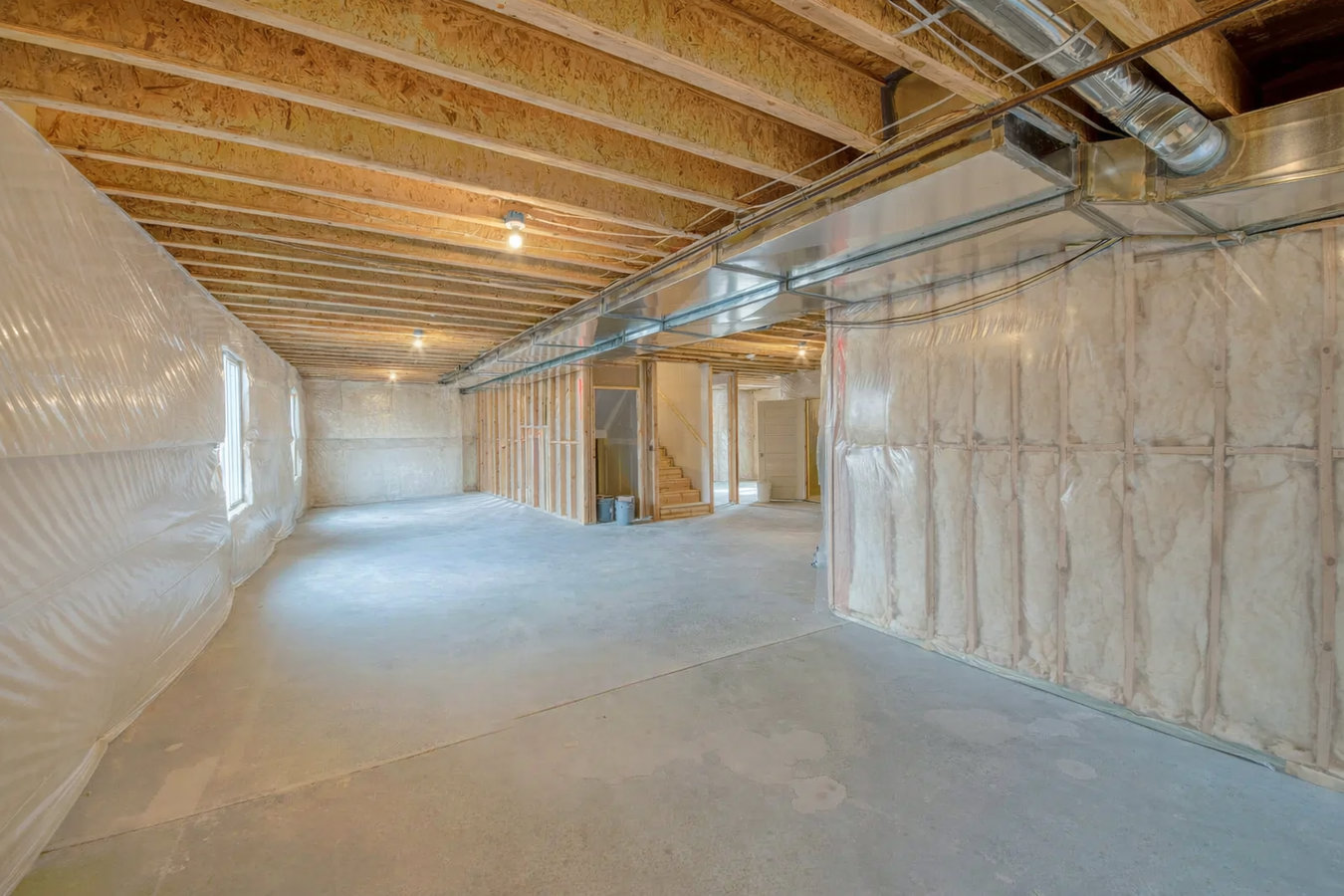
An uninsulated basement lets desert heat pour through your floors and monsoon moisture creep up your foundation walls. We install basement insulation that fixes both problems.
Basement insulation in Las Cruces creates a barrier between your living space and the heat and moisture that move through your foundation walls and floor, most jobs on a standard single-family home are completed in one to two days using spray foam or rigid foam board.
In Las Cruces, the problem runs in two directions. Summer highs above 100 degrees push heat through your basement ceiling and into the rooms above, making your cooling system work harder than it should. Then monsoon season arrives, and the same foundation walls that were bone-dry in April can show moisture intrusion in August when heavy rain saturates the soil quickly. Basement insulation, done right for this climate, addresses both.
Many homeowners also find that combining basement insulation with crawl space insulation gives them the most complete coverage below the living area, since both spaces contribute to heat gain and moisture risk in desert-climate homes.
These are the most common signs Las Cruces homeowners notice before calling us.
If your cooling costs climb sharply from June through September despite no change in thermostat habits, heat is likely entering through your uninsulated basement ceiling and foundation walls. The basement is one of the most overlooked heat entry points in desert-climate homes. Every cooling season you wait is money spent heating air that keeps warming back up from below.
If the floors in rooms directly above your basement feel uncomfortably warm during the summer months, that is a direct sign the basement ceiling has little or no insulation. Heat moves easily through uninsulated floor assemblies. This is one of the most common comfort complaints Las Cruces homeowners describe before getting basement insulation installed.
If your basement or the rooms above it develop a musty odor in July or August, moisture is getting into your foundation area during monsoon storms. Even in a dry climate, intense monsoon rainfall can saturate soil quickly and push moisture against basement walls. Moisture behind uninsulated or poorly insulated walls creates conditions where mold can develop over time.
Older Las Cruces homes, especially those built with adobe or concrete block walls before the mid-1980s, were often constructed without basement insulation because energy costs were lower and standards were different. If your home is more than 40 years old and you have never had the basement assessed, there is a good chance you are losing both energy and comfort every season without realizing it.
We install basement insulation for both finished and unfinished spaces across Las Cruces and the surrounding area. The right material and placement depend on how you use the space: if your basement is conditioned, meaning it is heated and cooled along with the rest of the house, we insulate the walls to bring it inside your home's thermal boundary. If it is simply a storage or utility area, insulating the ceiling between the basement and the living space above is often the more practical approach.
For most Las Cruces basements, we work with either spray foam or rigid foam board panels. Spray foam seals gaps and insulates at the same time, which makes it particularly effective on older adobe or block walls where the masonry can be porous. Rigid foam board is cut to fit and fastened to walls, offering good moisture resistance at a lower material cost. Both options outperform fiberglass batts in below-grade environments where moisture is a seasonal factor.
Every basement insulation job benefits from being paired with closed-cell foam insulation where air sealing is a concern, and we also recommend reviewing your crawl space insulation at the same time if your home has both a basement and a crawl space, since the two spaces often share the same heat and moisture dynamics. The U.S. Department of Energy provides guidance on recommended basement insulation placement and R-values for different climate zones, including the desert Southwest.
Best suited for conditioned basements where the space is heated and cooled alongside the rest of the home.
Ideal for unconditioned utility or storage basements where insulating the floor above is more cost-effective.
Preferred for older adobe or block walls where sealing and insulating in a single step provides the best moisture and air performance.
A cost-effective option for poured concrete or standard block walls where moisture levels are controlled and access is straightforward.
Las Cruces sits in the Chihuahuan Desert and sees summer highs above 100 degrees for months at a stretch. That heat enters your home through every surface, including the floor assembly above your basement. In a single-story ranch home, which is the most common housing type here, an uninsulated basement ceiling can be one of the largest contributors to heat gain. Cooling systems in Las Cruces homes have to work harder and longer than in milder climates, and basement insulation directly reduces that load.
Monsoon season adds a layer of complexity unique to this region. From July through September, brief but intense storms can dump an inch of rain in under an hour. The hard, dry desert soil does not absorb water quickly, so it runs off fast and pushes against foundation walls. Older homes near the Mesilla Valley, where soil composition varies across the valley floor, can see seasonal moisture shifts that newer homes on the rocky east mesa do not. Insulation installed without accounting for this pattern can trap moisture and create problems over time.
We serve homeowners across the Las Cruces area, including neighborhoods near downtown Las Cruces, the growing subdivisions out toward Anthony, and communities in Sunland Park. Our crews know the local housing stock across the region, and every project starts with a free written estimate that lays out the scope before you sign anything.
Here is exactly what the process looks like from your first call to finished work.
We respond within one business day. Have a rough sense of your basement size and whether you have noticed any moisture history, so we can prepare the right assessment.
We walk through your basement, check for moisture and existing insulation, and give you a written itemized quote explaining what we recommend and why. No surprise charges once work starts.
The crew arrives with materials and completes most jobs in one to two days. Clear the work area of stored items beforehand. If spray foam is used, plan to stay out of the basement for a few hours while it cures.
We walk you through the completed work, show you what was installed and where, and answer any questions before we pack up. If a permit inspection is required, we handle scheduling it.
Free estimates, written quotes, experienced local crews. We respond within one business day.
(575) 222-9399Every basement job starts with a free on-site assessment and an itemized written estimate you can review before you sign a single document. That transparency matters when someone is working in your foundation.
A significant portion of Las Cruces homes were built with adobe brick or concrete block, not standard wood framing. These wall types need specific approaches to avoid trapping moisture or interfering with natural thermal mass. We have worked on these construction types across Dona Ana County.
We check for moisture issues before any material goes on the wall, not after. Insulating over a damp surface traps that moisture and causes long-term damage. Our assessment includes a look at drainage and seasonal moisture risk so the installation performs correctly through the wet season.
Every estimate breaks down cost by material, area, and scope. You know exactly what you are paying for before the crew arrives. Las Cruces homeowners tell us this is one of the things that sets our process apart from contractors who give a single number with nothing behind it.
We have worked on basement and foundation insulation in Las Cruces homes ranging from older adobe construction near downtown to newer builds on the east mesa. That local experience means we understand the specific seasonal conditions here, not just the general principles that apply anywhere in the country.
Dense spray foam that seals air leaks and insulates in a single pass, well-suited for foundation walls and tight basement cavities.
Learn moreInsulation for the crawl space beneath your home, addressing the same heat and moisture dynamics as basement work from the ground up.
Learn moreSummer heat and monsoon moisture are coming. Contact us now to get your Las Cruces home assessed before the busiest season of the year.