
Open-Cell Foam Insulation
A lower-density spray foam option suited for interior walls and attic spaces where maximum air permeability and sound absorption are priorities.
Learn more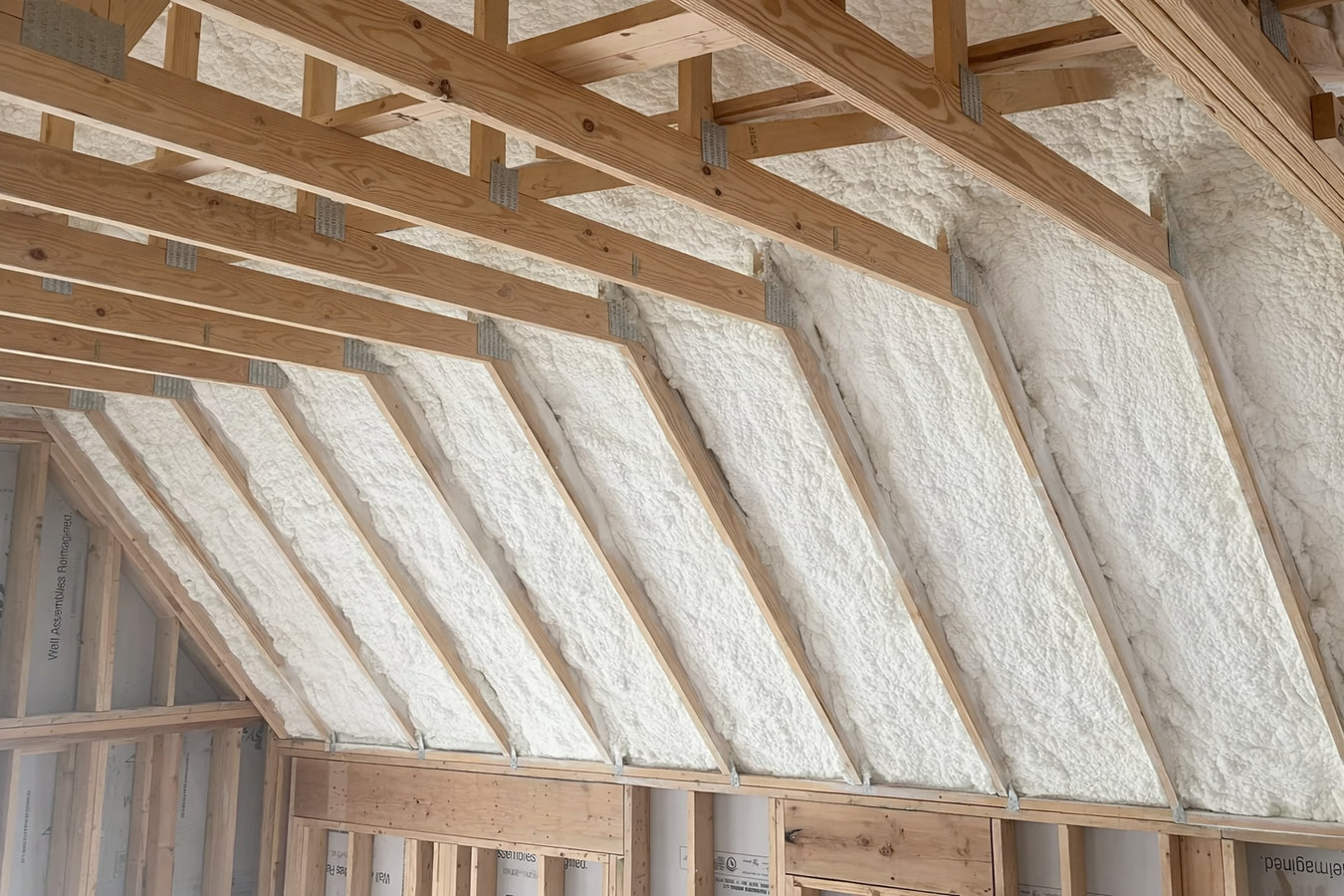
Las Cruces summers demand the strongest insulation available. Closed-cell spray foam seals air leaks and delivers high R-value performance in a single application built to last the life of your home.
Closed-cell foam insulation in Las Cruces is a two-part spray-applied material that expands, hardens, and seals gaps while insulating, most residential jobs are completed in one to two days and the foam stays put for the life of the structure without sagging or settling.
Unlike fluffy batt insulation that fills a cavity and stops there, closed-cell foam expands to fill every crack and seam in the area being treated. That means it acts as both insulation and an air barrier at the same time. In Las Cruces, where the temperature difference between a properly cooled interior and a 105-degree exterior can be 35 degrees or more, that combination matters. Standard insulation that allows air movement through gaps can lose much of its performance even when installed to the right thickness.
Homeowners who want the broadest coverage often pair closed-cell foam with open-cell foam insulation in areas of the home where the lower-density material performs well, using closed-cell where the conditions demand higher R-value or moisture resistance.
These are the most common signs Las Cruces homeowners recognize before calling us.
If your air conditioner runs nearly without stopping from May through September and your electric bill reflects it, your home is losing cooled air faster than the system can replace it. In Las Cruces, where temperatures regularly exceed 100 degrees, even small gaps in your attic or wall insulation can force your system into overdrive. This is one of the clearest signals that your thermal envelope needs serious attention.
Las Cruces spring windstorms push fine desert dust through the same gaps that let conditioned air escape. If you are wiping down counters and shelves after every dust event even with windows shut, those gaps are real and significant. Closed-cell foam seals them at the source, stopping dust infiltration at the same time it improves your energy performance.
If one bedroom or corner of your home runs noticeably hotter than the rest, particularly on the west side where the afternoon sun hits hardest, the insulation in that area is likely thin, absent, or has shifted over time. That localized heat gain is something a contractor can identify and address precisely rather than treating the whole house.
Hold your hand near an outlet on an exterior wall on a hot afternoon. If you feel warmth radiating through, outside air is moving through the wall cavity and into your living space. This is a common finding in older Las Cruces homes and a direct sign of gaps in the air barrier that insulation alone has not addressed.
We install closed-cell spray foam insulation in attics, crawl spaces, basement walls, rim joists, and wall cavities across Las Cruces and the surrounding area. The material is mixed on-site from two chemical components and sprayed directly onto the surfaces being treated, expanding to fill gaps and hardening into a dense, seamless layer. A trained crew calibrates the equipment to the correct thickness for each application based on the R-value required for your space and local code.
For Las Cruces attics, closed-cell foam is an especially strong performer because it delivers more heat resistance per inch than fiberglass or blown-in alternatives. When attic space is limited or when you want the insulation to also seal the roof deck against air and moisture, this material handles that combined task well. Homes with older adobe or stucco construction benefit from targeted foam application around penetrations, top plates, and any irregular framing that standard batt insulation cannot fully address.
We often recommend pairing closed-cell foam work with a broader spray foam insulation assessment to make sure every area of the home gets the right material for the conditions. In areas where maximum density is not required, we can recommend open-cell foam insulation as a complementary option at a lower material cost. The Spray Polyurethane Foam Alliance provides homeowner resources on installation standards and what to expect from a professional crew.
Best suited for attics where limited depth requires the highest R-value per inch, or where roof deck sealing is a priority alongside insulation.
Ideal for below-grade spaces where moisture resistance and air sealing performance matter as much as thermal value.
Well-suited for open-wall remodels and new construction where maximum density insulation in wall cavities is specified.
Practical for older homes where isolated gaps around pipes, wires, and framing are the primary source of heat and air infiltration.
Las Cruces sits in the Chihuahuan Desert and averages fewer than 10 inches of rain per year, but the daily temperature swing can be 30 to 40 degrees in a single day. That constant expansion and contraction puts stress on building materials over time. Softer insulation types can develop gaps at seams as framing moves through those cycles. Closed-cell foam hardens into a rigid layer that holds its position and its performance through years of desert temperature swings, which is one reason contractors familiar with this climate lean toward it for critical areas like attic decks and foundation edges.
A significant portion of Las Cruces homes were built with adobe brick or thick stucco walls. These construction types have irregular cavities, unusual framing, and air gaps that standard batt insulation cannot fully address. Spray foam's ability to conform to irregular surfaces and fill odd-shaped spaces makes it a practical choice for homeowners trying to improve the energy performance of an older Southwestern home. Spring windstorms are a seasonal reality here, and the same gaps that let conditioned air escape also let fine desert dust into the home. Sealing those gaps with foam solves both problems at once.
We install closed-cell foam throughout the area, including neighborhoods in Las Cruces, homes in El Paso, and properties across Chaparral. New Mexico's statewide energy code sets minimum performance requirements for permitted insulation work, and the New Mexico Energy, Minerals and Natural Resources Department oversees those standards. Closed-cell foam typically meets or exceeds those minimums at standard installation thicknesses.
Here is exactly what the process looks like from your first call to the day the work is done.
We respond within one business day. Be ready to describe the age of your home, which areas you want treated, and any specific problems you have noticed, like high bills or dust infiltration after windstorms.
We walk through your home, measure the areas to be treated, check access and existing insulation, and give you a written estimate broken down by area and material. You know the cost before we start.
On installation day, you and your family need to be out of the home for at least 24 hours after spraying is complete. Arrange somewhere to stay with your pets. Your contractor will give you a specific re-entry time based on the job scope.
Once you return, we walk you through the completed work and confirm what was done and where. If a permit was required, we handle scheduling the city inspection. Keep permit documentation with your home records for future reference.
Written quotes, experienced local crew, one business day response. No obligation.
(575) 222-9399Closed-cell foam requires calibrated two-component spray equipment, full protective gear, and a crew that understands application thickness and cure time. We do not hand a spray gun to an untrained installer and call it done. The Spray Polyurethane Foam Alliance sets the training standard for this trade, and we work to those standards.
Older Las Cruces homes with adobe or thick stucco construction have specific application requirements that a contractor without local experience may not recognize. We have installed foam in these homes across Dona Ana County and know where to apply it and where not to in Southwestern masonry construction.
Every project starts with a free written estimate you can review before you sign anything, and we document the finished application thickness and coverage. That transparency means accountability and a clear record of exactly what was installed on your property.
We have worked on homes throughout the Las Cruces area since 2022, from older neighborhoods near downtown to newer subdivisions on the east mesa. That local presence means we understand the permit office, the housing stock, and the seasonal conditions that affect how insulation performs here.
Spray foam insulation is one of the more consequential home improvements you can make in a desert climate, and it is not easily undone once it cures. Choosing a contractor with direct local experience, documented work, and transparent pricing gives you the best chance that the work performs the way it should for the life of your home.
A lower-density spray foam option suited for interior walls and attic spaces where maximum air permeability and sound absorption are priorities.
Learn moreA full overview of our spray foam services for Las Cruces homes, covering both open- and closed-cell applications across all areas of the home.
Learn moreSummer heat arrives fast in the Chihuahuan Desert. Contact us now to get your home assessed before the schedule fills up.