
Retrofit Insulation
Insulation added to an existing home without tearing out walls, often paired with vapor barrier installation for a fully conditioned crawl space.
Learn more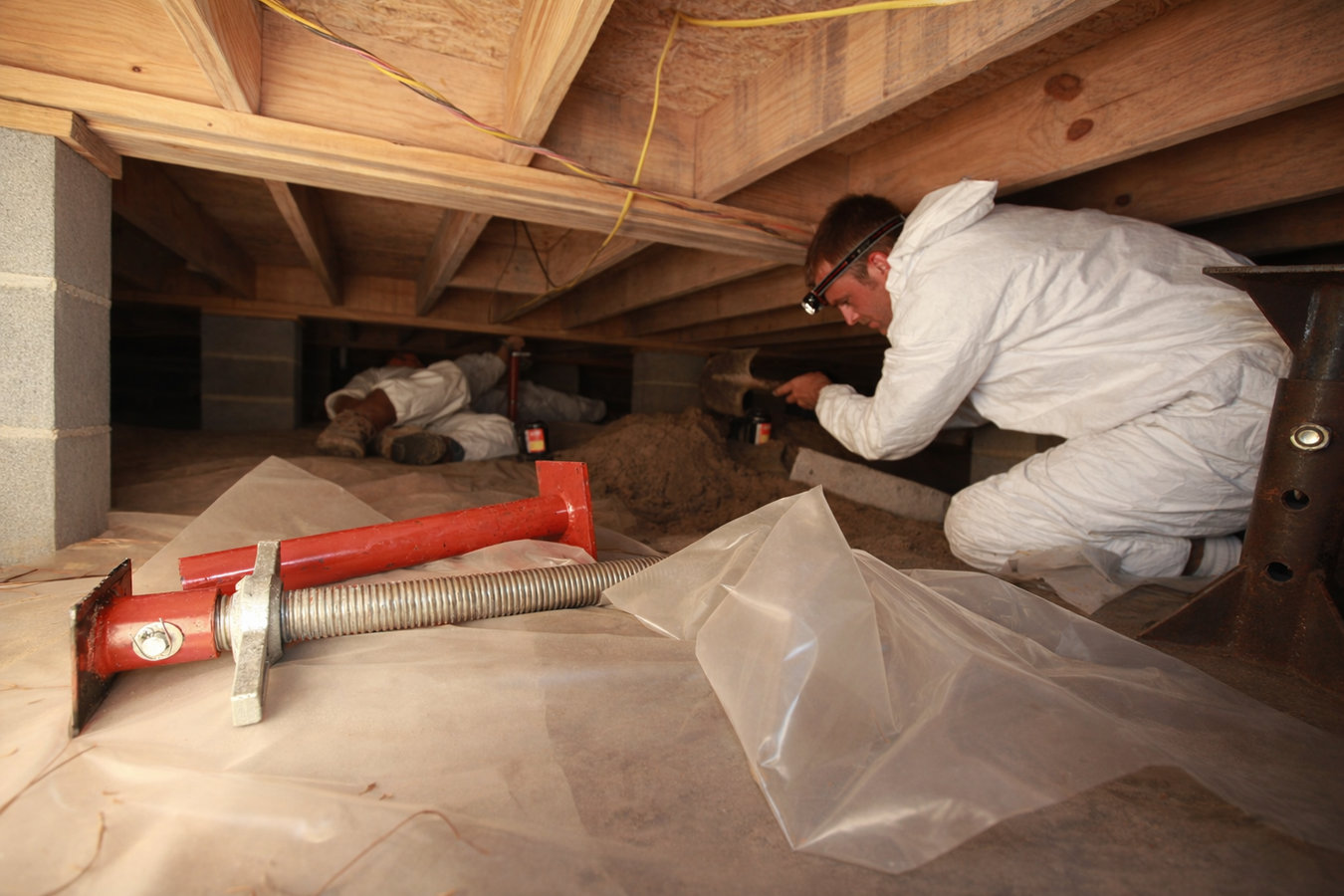
Monsoon rains and caliche soil push moisture into unprotected crawl spaces every summer in Las Cruces. Proper vapor barrier installation stops that cycle and protects your floor structure for decades.
Vapor barrier installation in Las Cruces covers the bare ground in your crawl space with heavy polyethylene sheeting to block soil moisture from rising into your floor structure, most single-family home jobs take one to two days and the barrier is fully effective the moment installation is complete.
Las Cruces sits in the Chihuahuan Desert, but desert air does not mean dry soil. The clay-heavy soils in the Mesilla Valley absorb monsoon rainfall and release moisture slowly for weeks afterward. Homes with evaporative coolers face a compounding problem: those units add humidity to the indoor air, and when ground moisture is also rising from below, the two sources combine to push indoor humidity well above what most homeowners expect in a desert home.
Vapor barrier installation is typically done alongside or before other crawl space work. Many homeowners pair it with a crawl space vapor barrier that focuses on the floor, then add retrofit insulation to the floor joists for a fully conditioned and protected crawl space in one project.
These are the warning signs Las Cruces homeowners can recognize on their own before calling a contractor.
A damp, earthy smell that appears during or after Las Cruces summer rains and fades as the soil dries out in fall is a reliable sign that ground moisture is moving into your living space. It is easy to dismiss as seasonal, but the underlying moisture does not stop when the smell does. Each monsoon cycle pushes more water into unprotected floor framing.
Wood that has absorbed ground moisture weakens over time from the inside before showing any visible damage. If any part of your floor flexes when you walk on it or feels noticeably different underfoot than the surrounding area, moisture from below has likely been working on the subfloor for longer than you realize. Early intervention costs far less than structural repairs.
Water droplets forming on metal pipes or HVAC ductwork in your crawl space mean ground moisture is actively present. In Las Cruces homes that use evaporative coolers, this combination of cooler air from above and warm moist air rising from the soil creates ideal conditions for condensation to form on metal surfaces and drip onto the framing below.
Subterranean termites and wood-boring insects need moisture to survive, and southern New Mexico has real termite pressure. If a pest control company has flagged activity under your home, or if you have seen mud tubes along your foundation, the damp crawl space conditions attracting them almost certainly originate with unprotected soil. A vapor barrier removes the moisture that makes your crawl space hospitable to them.
We begin with an in-person crawl space assessment rather than a phone quote. A technician enters the space, checks the soil condition, existing material, any moisture damage to framing, and the full dimensions before giving you a written price. That visit protects you from surprise add-ons once work begins, because we find and address anything the space needs before we start.
The standard installation covers the entire crawl space floor with durable polyethylene sheeting, typically 10 to 20 mils thick, that holds up under foot traffic from future plumbing or HVAC service. Every seam overlaps by at least 12 inches and is taped, and the material runs up the foundation walls and is mechanically fastened so moisture has no path around the edges. A basic crawl space vapor barrier focused solely on the ground is often sufficient for Las Cruces homes where the primary concern is rising soil moisture rather than full encapsulation.
For homes with persistent humidity, a history of standing water, or older construction that lacks any existing protection, we offer a more complete installation that seals the crawl space walls as well. This is closer to full encapsulation and is typically paired with retrofit insulation on the floor joists for homeowners who want to address thermal performance at the same time. The Building Science Corporation has published detailed guidance on why sealed crawl spaces outperform vented ones in most southern climates, and our installation methods follow those principles.
Best for homes where rising soil moisture is the primary concern; covers the full crawl space floor with thick, sealed sheeting fastened at the foundation walls.
Suited to homes with persistent humidity, significant monsoon exposure, or older housing stock that lacks any moisture protection; extends the barrier up the crawl space walls.
Right for homes where old sheeting is torn, bunched, or missing entirely; includes removal of the degraded material, prep work, and a full fresh installation.
For homeowners who want to address moisture and energy efficiency in a single project; pairs the barrier with floor joist insulation for a fully sealed and thermally improved crawl space.
Las Cruces receives roughly 9 to 10 inches of rain per year, but almost all of it comes in a concentrated two-month window. The North American Monsoon System pushes moisture into the region from late June through September, and the soil absorbs it fast, then releases it slowly for weeks. Homes without vapor barriers experience the most moisture pressure during and immediately after that window, which is exactly when Las Cruces homeowners start noticing musty smells, condensation on pipes, or floors that feel slightly different underfoot.
A large share of Las Cruces homes also use evaporative coolers rather than traditional air conditioning. These units add moisture to the indoor air to cool it, which works well during the dry spring months but can interact badly with ground moisture rising from an unprotected crawl space during monsoon season. The two sources of humidity compound each other in ways that a homeowner running a swamp cooler may not immediately connect to the crawl space below. The NMSU Extension has published resources on home moisture management in southern New Mexico that are worth reviewing alongside any contractor recommendation.
We serve the full Las Cruces area, including communities throughout the southern Mesilla Valley where caliche soil and river proximity make moisture management a consistent concern. Homeowners in Sunland Park, Anthony, and El Paso face the same soil and climate conditions and have access to the same installation services.
Here is exactly what to expect from first contact through a finished, verified installation.
We respond within one business day. A brief call covers your home size, whether you have noticed any specific problems, and whether you have a crawl space or slab foundation, which determines whether vapor barrier work applies to your home at all.
A technician enters your crawl space and checks the current condition of the soil, any existing material, moisture damage, and the full dimensions. This takes 30 to 60 minutes. We walk you through what we found and give you a written estimate before asking you to commit to anything.
On installation day, the crew removes any old material or debris, then lays thick polyethylene sheeting across the entire floor. Every seam is overlapped and taped, and the material runs up and is fastened to the foundation walls. Most single-family homes are done in one full day with no disruption to your living space.
Once the installation is complete, we invite you to see the finished work or provide photos if the space is too tight to enter comfortably. We show you the sealed seams, how the material meets the walls, and any areas that needed special handling. You leave with documentation of what was done.
We come out, take a look under your home, and give you a straight answer about what you need and what it will cost. No obligation, no sales pitch.
(575) 222-9399We have assessed crawl spaces throughout Dona Ana County and understand how caliche layers, proximity to the Rio Grande, and the annual monsoon cycle affect moisture behavior under homes in this area. That context shapes every recommendation we make, rather than applying a one-size approach designed for a different climate.
Since opening in 2022, we have installed vapor barriers and crawl space moisture control in homes ranging from older downtown adobe properties to newer stucco builds on the east mesa. Each type of construction has its own crawl space profile, and we come to each job knowing what to look for.
Every job is handled by our own experienced crews. We do not hand jobs off to subcontractors, so the crew that does the assessment is familiar with the specific conditions in your crawl space when installation day arrives.
Vapor barrier work is invisible once the hatch is closed, which is exactly why we walk every homeowner through the finished job or provide photos before we leave. Sealed seams, material running up the walls, no bare soil showing anywhere. You can see and confirm the quality of what was installed, not just take our word for it.
Crawl space moisture is one of those problems that is easy to overlook until it becomes expensive to fix. In Las Cruces, where the monsoon season delivers real moisture pressure every summer, having a properly installed vapor barrier is one of the most practical things a homeowner can do to protect the structure of their home.
Insulation added to an existing home without tearing out walls, often paired with vapor barrier installation for a fully conditioned crawl space.
Learn moreGround-focused vapor barrier work for homeowners whose primary concern is blocking rising soil moisture from reaching floor framing.
Learn moreLas Cruces summers bring real moisture pressure from below. Schedule your free crawl space assessment now and lock in your installation date before the rains arrive.