Spray foam insulation
Seals gaps and cavities with an expanding foam that stops air infiltration and boosts energy efficiency.
Learn more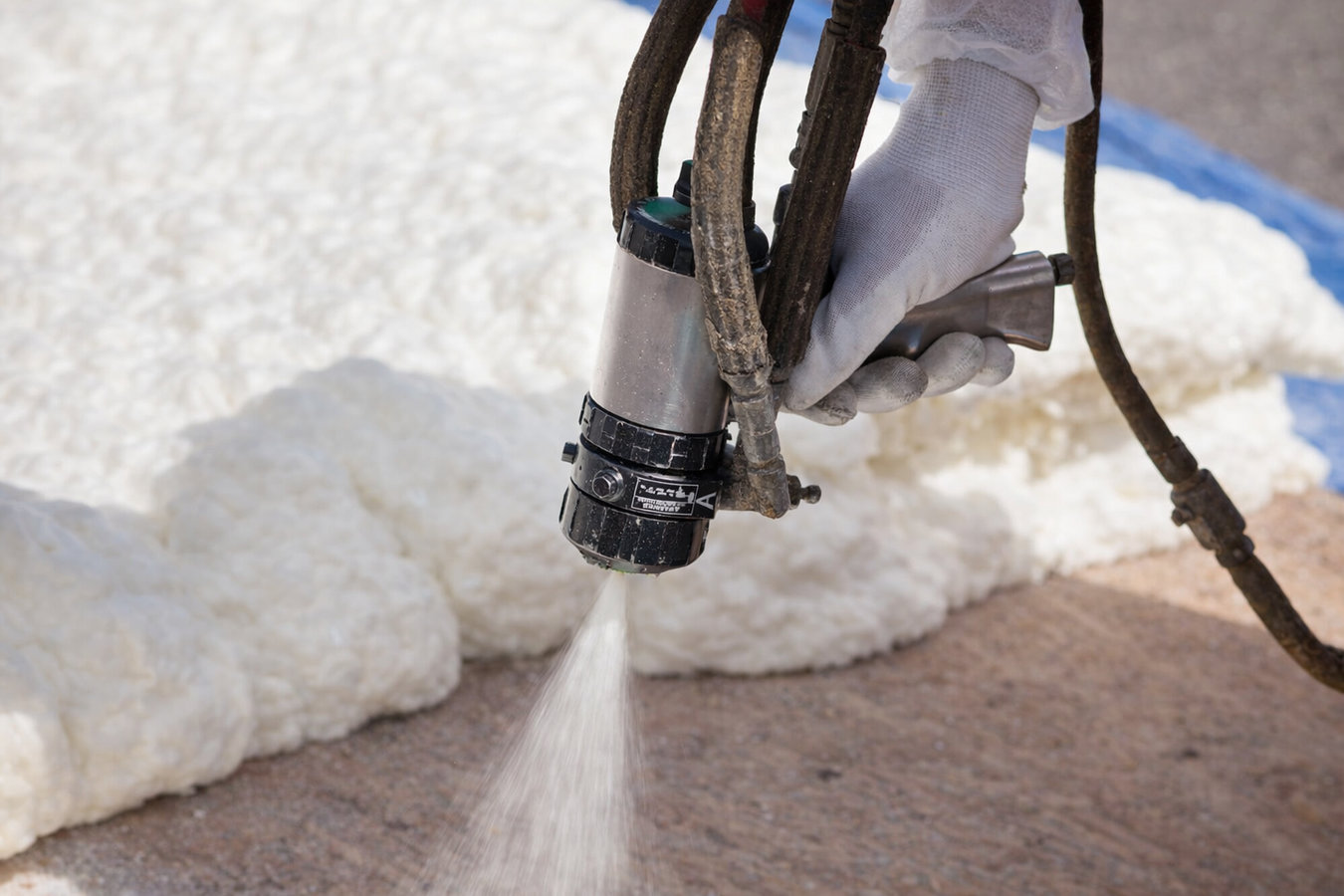
Las Cruces Insulation is a local New Mexico insulation contractor serving Roswell, NM with spray foam insulation, attic insulation, and air sealing. We work on the mid-century ranch homes, stucco construction, and slab-foundation properties throughout Chaves County and respond to new service requests within one business day.
Roswell averages around 192 sunny days per year, and attic temperatures in the ranch homes and stucco houses common to this area push well above 130 degrees on summer afternoons. Spray foam addresses both the heat transfer problem and the air infiltration problem at once, sealing the gaps that let hot desert air and spring windstorm dust into the home while insulating in the same step. Our spray foam insulation service is a practical choice for Roswell homes where air leakage and heat gain are both significant contributors to high cooling bills.
The majority of homes in Roswell's core neighborhoods were built between the 1940s and 1970s, and many still have their original attic insulation, which has compressed and degraded over decades of UV exposure and temperature cycling. In a city where summer air conditioning costs dominate the utility bill for five or more months, an under-insulated attic is the single biggest avoidable energy cost. Bringing attic insulation to the level recommended for this climate zone delivers measurable savings starting in the first full summer after the upgrade.
Roswell's spring winds bring gusts of 40 to 60 mph in March and April, driving fine dust and sand into every gap around windows, doors, and attic penetrations. In older stucco homes, hairline cracks in the exterior finish also allow outside air directly into the wall cavity. Air sealing the attic floor, top plates, and penetrations before adding new insulation is how a job delivers the savings it promises, rather than layering new material over existing leaks.
Blown-in loose-fill is the most practical upgrade for the attics in Roswell's mid-century ranch homes, where original framing is often irregular and adding batts would require more disruption than the job warrants. It fills every space evenly, including areas around joists, vents, and fixtures, and can be added directly on top of existing insulation in decent condition. For Roswell homeowners who want a straightforward upgrade with minimum disruption to the rest of the house, blown-in is typically the fastest path to a measurable improvement.
A large share of Roswell's housing stock was built before modern insulation standards existed, and many of these homes have never had their insulation upgraded. Retrofit insulation work brings an older home closer to modern performance without requiring gut renovation, which matters in a market where home values are modest and the goal is comfort and utility savings. Stucco and adobe-style exteriors common throughout Roswell require assessment before recommending a wall insulation method, since not every approach suits every construction type.
Roswell sits at roughly 3,600 feet on the Pecos Valley floor in Chaves County, surrounded by flat, semi-arid land that provides little protection from weather coming in from any direction. The city averages around 192 sunny days per year, and summer highs regularly reach the mid-90s Fahrenheit. That sustained UV exposure degrades roofing materials, exterior caulk, and paint faster than in cooler climates, and attic temperatures on peak summer days can climb well above 130 degrees. Homes without adequate attic insulation effectively have a heat collector above the ceiling, which forces air conditioners to run almost continuously from May through September and drives up electricity bills each season.
The housing stock is the defining factor. A large portion of Roswell's residential neighborhoods, particularly those closest to downtown, New Mexico Military Institute, and the historic core, consist of single-story ranch homes built between the 1940s and 1970s. These homes were typically built with wood framing, original single-pane windows, and insulation levels well below what is now recommended for this climate zone. Stucco is the dominant exterior finish across both older and mid-century construction, and stucco develops hairline cracks from ground movement and temperature cycling that open pathways for outside air. Newer subdivisions on the north and northwest sides of the city are better insulated, but the majority of Roswell homeowners are dealing with older properties that have significant thermal deficits.
Winter adds a separate set of risks. Roswell averages about 11 inches of snow per year, and temperatures regularly drop below freezing from November through February, with overnight lows occasionally dipping into the teens during cold snaps. Pipes in uninsulated walls or crawl spaces are at real risk of freezing during these events. The city also receives most of its annual rainfall from July through September in the form of intense monsoon thunderstorms, which can deliver a large volume of water quickly and stress gutters, drainage, and any crawl space insulation that is not protected from moisture. An insulation contractor who understands these seasonal patterns designs the job to address the full cycle of what a Roswell home faces, not just the summer heat.
The crew works regularly on Roswell properties and consistently encounters the same starting point: mid-century ranch homes where the original attic insulation has never been upgraded, often compressed flat and coated in years of desert dust. Stucco and adobe-style construction is common enough here that the team approaches each job knowing the exterior may have developed gaps from ground movement and temperature cycling that need to be considered alongside the attic work. When jobs in Roswell require permits, the Chaves County government and City of Roswell handle the relevant oversight, and our team is familiar with the local process.
Roswell is the county seat of Chaves County and one of the larger cities in southeastern New Mexico. The city is anchored by New Mexico Military Institute on the north side of downtown, and neighborhoods radiate outward from the historic core toward newer subdivisions on the north and northwest edges of town. Major routes including North Main Street and West Second Street connect the residential and commercial areas of the city, and the flat valley terrain means the crew can move between jobs without the access complications that mountain towns create. Bottomless Lakes State Park, about 12 miles east on Bottomless Lakes Road, is a well-known landmark that most locals use as a geographic reference for the east side of the metro area.
Roswell homeowners can also explore service pages for nearby communities we work in regularly, including Hobbs, NM, the Permian Basin oil city about 90 miles to the southeast with similar mid-century housing stock, and Socorro, NM, another Chihuahuan Desert community where we handle attic and retrofit insulation work.
We respond to all Roswell inquiries within one business day. When you reach out, we ask a few basic questions about your home, the areas you want addressed, and what you have noticed, so the crew comes prepared rather than starting cold.
A contractor visits to look at your attic, walls, and any other areas of concern. This is where we address cost questions directly: we measure what is already in place, explain what we find in plain terms, and tell you what we recommend and why before quoting anything.
You receive a written estimate that breaks down materials, scope, and total cost. Once you approve the work, we schedule it and provide a prep list. For spray foam jobs, that includes arranging to be out of the home for at least 24 hours during and after installation.
Most Roswell residential jobs finish in one to two days. When the work is complete, we walk you through what was installed and where, answer any remaining questions, and hand over documentation needed for utility rebates, tax credits, or permit records.
We serve homeowners throughout Roswell and Chaves County. No pressure, no surprise charges. One business day response, free site visit.
(575) 222-9399Roswell is the county seat of Chaves County and home to roughly 47,000 to 48,000 residents, making it one of the larger cities in southeastern New Mexico. The city sits at about 3,600 feet on the Pecos Valley floor and grew steadily through the mid-20th century around agriculture, ranching, and military activity. Walker Air Force Base operated here until 1967 and its closure shaped the layout of some of the city's older residential areas. Today the economy runs on farming and ranching, oil and gas production, and New Mexico Military Institute, whose campus on the north side of downtown is one of the most recognizable landmarks in the city.
Roswell's residential character is defined by its mid-century core. Single-story ranch homes on concrete slabs dominate the neighborhoods from downtown out toward the established parts of the city, with stucco and adobe-style finishes common across both older construction and mid-century builds. Lot sizes tend to be modest, with small to medium yards and minimal tree cover. Newer subdivisions on the north and northwest sides of the city represent the growth of the past two decades and have somewhat better insulation, but the majority of owner-occupied homes in Roswell are in the older stock. Roswell is also internationally known for the International UFO Museum and Research Center, located downtown on Main Street, which draws visitors from around the world each year.
We serve homeowners throughout Roswell and the surrounding Chaves County area. For homeowners looking at nearby communities, we also work regularly in Socorro, NM, another New Mexico community along the Rio Grande corridor where the housing stock and climate conditions have some overlap with the Pecos Valley.
Seals gaps and cavities with an expanding foam that stops air infiltration and boosts energy efficiency.
Learn moreKeeps conditioned air inside by adding a proper thermal barrier above your living space.
Learn moreLoose-fill material blown into attics and walls to fill every corner without major demolition.
Learn moreWhole-home assessments and installations that reduce energy bills and improve indoor comfort.
Learn moreSafe extraction of old, damaged, or contaminated insulation before new material is installed.
Learn moreInsulates the floor system above the crawl space to prevent moisture and heat loss from below.
Learn moreFills interior and exterior wall cavities to cut heat transfer through the building envelope.
Learn moreLocates and seals leaks around penetrations, joints, and edges to stop unwanted airflow.
Learn moreInsulates basement walls and rim joists to eliminate cold floors and reduce heating costs.
Learn moreHigh-density spray foam that provides superior R-value and acts as a moisture barrier.
Learn moreLightweight, flexible foam ideal for interior walls and attics where sound control matters.
Learn moreTargets the attic floor plane to block stack-effect airflow before insulation is added.
Learn moreHeavy-duty liner installed on crawl space floors to block ground moisture from entering the home.
Learn moreInstalls poly sheeting or rigid barriers that control moisture migration in walls and floors.
Learn moreUpgrades existing insulation in older homes without full wall or ceiling removal.
Learn moreInsulation solutions for office buildings, warehouses, and light commercial construction.
Learn moreYour home has been fighting the Pecos Valley heat and wind long enough. Call today and find out what an upgrade would actually cost.