Home Insulation
Whole-home insulation assessments and upgrades covering attics, walls, and crawl spaces in Las Cruces.
Learn more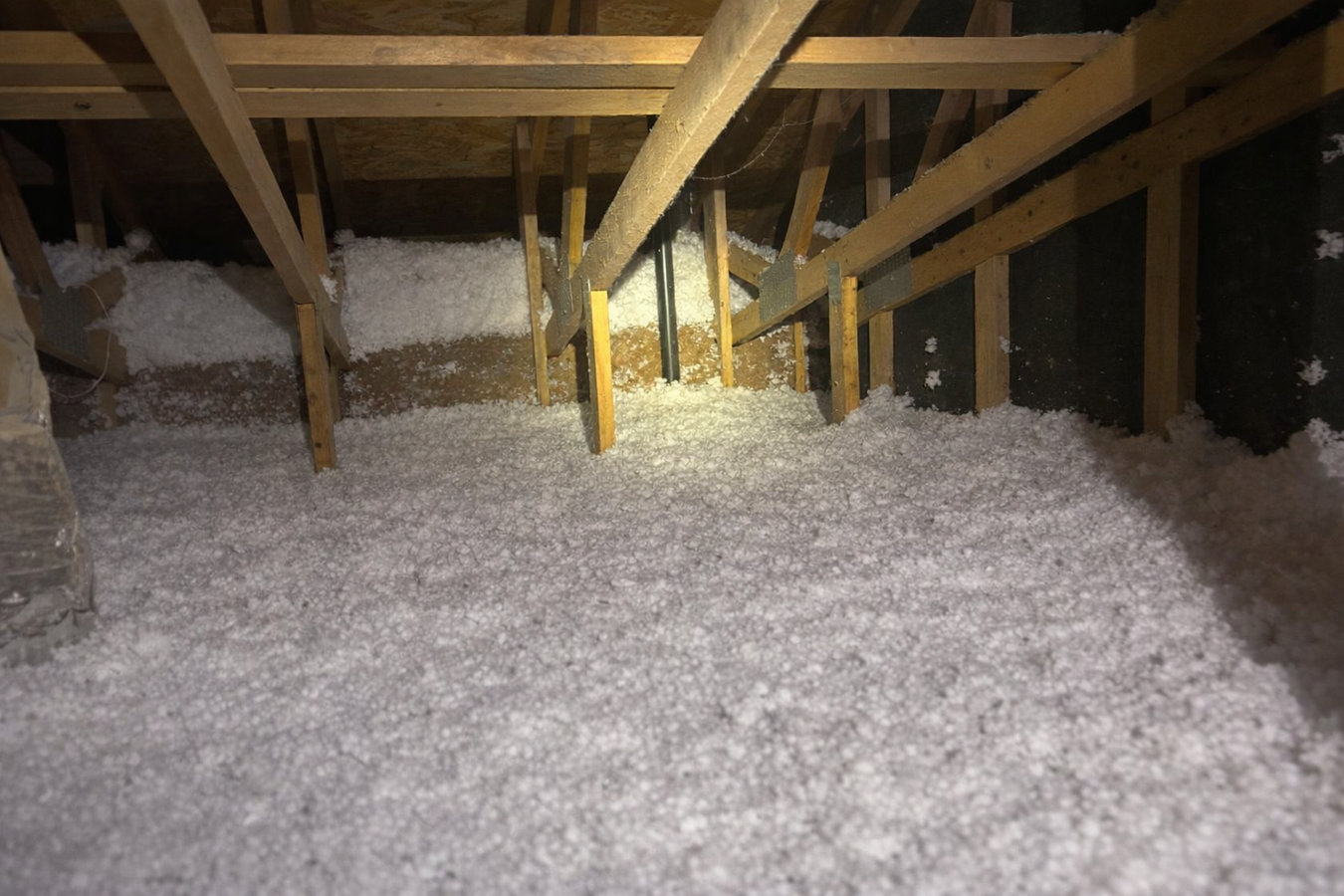
An under-insulated attic lets summer heat pour through your ceiling all day long. Blown-in insulation fills every gap and corner, builds the thermal barrier your home needs, and gives your AC a chance to keep up with the desert.
Blown-in insulation in Las Cruces fills your attic with a dense layer of loose-fill material using a hose connected to a machine outside, creating an even thermal barrier with no gaps or thin spots. Most attic jobs are completed in a single morning, three to five hours from setup to cleanup, and you can stay home the entire time.
Blown-in insulation is well suited to this area because it fills the irregular spaces common in older Las Cruces construction, including adobe and concrete block homes, without requiring any changes to your walls or structure. It is also one of the most practical ways to reach the attic R-values the Department of Energy recommends for the Chihuahuan Desert climate zone. If your home has old fiberglass batts that have settled or compressed over the years, adding blown-in material on top is typically faster and less disruptive than a full removal and replacement.
Many homeowners in the area pair blown-in attic insulation with attic insulation work to address the full attic floor and any penetrations that allow conditioned air to escape. A short walkthrough during your estimate visit is usually enough to determine whether a combined approach makes sense for your home.
If your El Paso Electric bill climbs sharply each June and stays high through September without any change in your habits, your attic insulation may not be doing its job. Las Cruces summer temperatures routinely exceed 100 degrees Fahrenheit, and attic temperatures can climb past 150 degrees on a clear afternoon. A thin or degraded insulation layer lets that heat press down through your ceiling all day, forcing your air conditioner to run constantly.
If the bedrooms at the back of your house or the rooms directly under the roof feel significantly warmer than the rest of your home, even with the AC running, that is a strong sign the insulation above those rooms is thin or missing. Heat moves through ceilings fastest where insulation is sparse, and those hot spots are usually the first thing homeowners notice before they realize there is a broader issue.
Many Las Cruces homes built in the 1960s and 1970s, including adobe and block construction common in this area, were built with little or no attic insulation by today's standards. If you can see the ceiling joists clearly through your attic hatch, the insulation is almost certainly too thin for this climate. The material that is there may also have settled or degraded significantly over decades of desert heat cycles.
Las Cruces experiences frequent dust storms, especially in spring, and fine particulate matter can accumulate in attic spaces over time. If you see dusty residue around your attic access panel or notice a musty smell when it is opened, the existing insulation may be compromised. Degraded or dust-saturated insulation does not perform the way it should, and it can affect the air quality in your living space when the hatch is disturbed.
We install blown in insulation in attics, wall cavities, and hard-to-reach spaces where batts cannot lay flat or cover fully. The process starts with a thorough assessment of your existing insulation depth and a check for air leaks around light fixtures, plumbing penetrations, and the tops of interior walls. Sealing those gaps before the blowing starts is what separates a job that performs from one that just looks complete.
For homes where the goal is a full thermal upgrade, we can combine blown-in attic insulation with a broader home insulation project that addresses walls, crawl spaces, and other areas losing heat or gaining it. Many Las Cruces homeowners in older adobe or stucco homes find that a combined approach closes the performance gap between their home and newer construction in a single project.
After the blowing is complete, we measure the finished depth, document the materials used, and provide you with the paperwork you need for any El Paso Electric rebate application or federal tax credit. You should not have to ask for documentation; it should be part of how the job is closed out.
The most common application in Las Cruces, suited to single-story homes where the attic floor is the primary barrier against desert heat.
Ideal for older Las Cruces homes with empty or under-insulated wall cavities where adding material without opening walls is the priority.
For homes where the attic already has some insulation but not enough for this climate, adding a new layer on top is faster and less costly than full removal.
Combines gap sealing around fixtures and penetrations with a new insulation layer, the combination that produces the greatest improvement in comfort and efficiency.
Las Cruces sits in Climate Zone 3B, one of the hottest and driest zones in the country, where summer highs regularly exceed 100 degrees Fahrenheit and attic temperatures can climb past 150 degrees on a clear afternoon. That heat pushes hard through an under-insulated ceiling, making your air conditioner work overtime and driving up your electric bill every June through September. Upgrading your attic insulation is one of the most direct ways to reduce that load. Most homeowners notice the difference on their El Paso Electric bill within the first cooling season.
A large share of Las Cruces homes were built before 1980 using adobe brick, concrete block, or stucco-over-frame construction that was never designed with modern insulation in mind. These homes often have little or no insulation in the attic and may have wall cavities that are difficult to access. Blown-in insulation is particularly well suited to these older structures because it fills irregular spaces without requiring demolition. From the historic adobe neighborhoods near Old Mesilla to the ranch-style homes across Anthony and the growing subdivisions in Sunland Park, the homes we work on across this region share that same need for better attic coverage.
Las Cruces also experiences frequent dust storms, particularly in spring, and the region's low humidity means attic spaces can accumulate fine particulate matter over time. A contractor doing a thorough job will assess the condition of existing insulation before adding new material on top. Sometimes the right call is to remove and replace rather than add, especially in homes where dust accumulation or pest activity has degraded what is already there. Homeowners in areas like El Paso and surrounding communities face identical conditions and can benefit from the same assessment before work begins.
We reply within one business day. The first conversation is short; we ask about your home's age, size, and what is prompting the call, so we arrive prepared rather than discovering surprises on the day of the job.
We go into your attic, measure existing depth, check for air leaks and moisture, and look for anything that should be addressed before new material goes in. The assessment takes 30 to 45 minutes and ends with a written quote, not a verbal ballpark.
Before any material goes in, we seal gaps around light fixtures, plumbing pipes, and wall tops. This step is easy to skip and easy to miss, but it is what separates a job that performs from one that just looks complete when you peek through the hatch.
The machine stays outside while the crew works from inside the attic, building an even layer from eave to eave. We check finished depth with a gauge before wrapping up, and you leave with documentation of the material used and the depth achieved.
Free written estimate, no obligation, and we reply within one business day. No pressure, no sales pitch, just a clear quote you can compare.
(575) 222-9399Our crews work in Las Cruces homes every week and know how blown-in material behaves in local attics, from older adobe to newer subdivisions. Every job is completed to the scope we put in writing, and we document the finished coverage and depth so you have a clear record.
Every estimate we provide is written, itemized, and delivered before any work begins. You get a clear breakdown of materials, labor, and scope so you can compare our quote against others without guessing what is included. There are no surprise add-ons once the crew is at your door.
Skipping air sealing is one of the most common shortcuts in the industry, and it leaves real savings on the table. We seal gaps before the blowing starts on every attic job, not as an upsell but as the baseline for work that actually performs in a desert climate.
El Paso Electric rebate programs and the federal energy efficiency tax credit both require documentation of the work. We provide that paperwork automatically, including the material type, depth achieved, and square footage covered. You should not have to chase your contractor for records after the job is done.
Every one of these points comes back to the same thing: we do the job the way it should be done, we document it, and we stand behind it. That is what homeowners in Las Cruces should expect from any insulation contractor they let into their attic.
Whole-home insulation assessments and upgrades covering attics, walls, and crawl spaces in Las Cruces.
Learn moreTargeted attic insulation services that address heat gain at the source in Las Cruces homes.
Learn moreSpots fill up fast once the Las Cruces cooling season starts. Call today or submit a request online and we will get back to you within one business day.